
A reliable internet connection is no longer a luxury. For homes, offices, shops, schools and other organisations, a good network can make everyday activities faster and more dependable. From browsing and video calls to cloud applications, online payments, CCTV systems and shared devices, many activities now depend on a stable connection.
However, having an internet subscription does not automatically mean you have a good network. The quality of your router, Wi-Fi coverage, connected devices and network setup can all affect how well your connection performs.
Choosing the right networking equipment starts with understanding what you actually need. The best device for a small home may not be suitable for a busy office, while a Wi-Fi extender may solve a coverage problem without requiring you to replace your entire network.
Here are some important things to consider before choosing networking equipment.
1. Understand the Size of the Area
The first thing to consider is the size and layout of the space where the network will be used.
A small apartment with only a few connected devices may work well with a standard router positioned in a suitable central location. A larger home, office or business premises may require additional equipment to provide better coverage.
Walls, floors, furniture and the general structure of a building can affect wireless signals. This means that simply buying a more expensive router does not always solve every coverage problem.
If certain rooms consistently have weak Wi-Fi, a Wi-Fi extender or another suitable networking solution may help improve coverage in those areas.
2. Consider How Many Devices Will Connect
The number of connected devices is another important factor.
A modern home can have smartphones, laptops, smart TVs, tablets, gaming devices and other connected equipment using the same network. Businesses may have even more devices, including computers, printers, phones, access points, security equipment and other technology.
As the number of connected devices increases, your networking equipment needs to be capable of handling the demand.
Before purchasing a router or other networking device, consider how many devices will regularly connect to the network rather than only looking at the advertised internet speed.
3. Match the Equipment to Your Internet Connection
Your networking equipment should be appropriate for the internet service you are paying for.
For example, if you have a relatively high-speed internet connection but use outdated networking equipment, you may not get the performance you expect. On the other hand, purchasing equipment far beyond your actual requirements may not provide meaningful benefits.
Look at the specifications of the router or networking device and compare them with your internet service, expected number of users and intended use.
The goal is not simply to buy the most powerful device available. It is to choose equipment that makes sense for your particular requirement.
4. Think About Wi-Fi Coverage
Coverage is one of the most common reasons people look for networking equipment.
You may notice that Wi-Fi works well close to the router but becomes weaker in another room. In a business environment, some areas may also have unreliable wireless coverage.
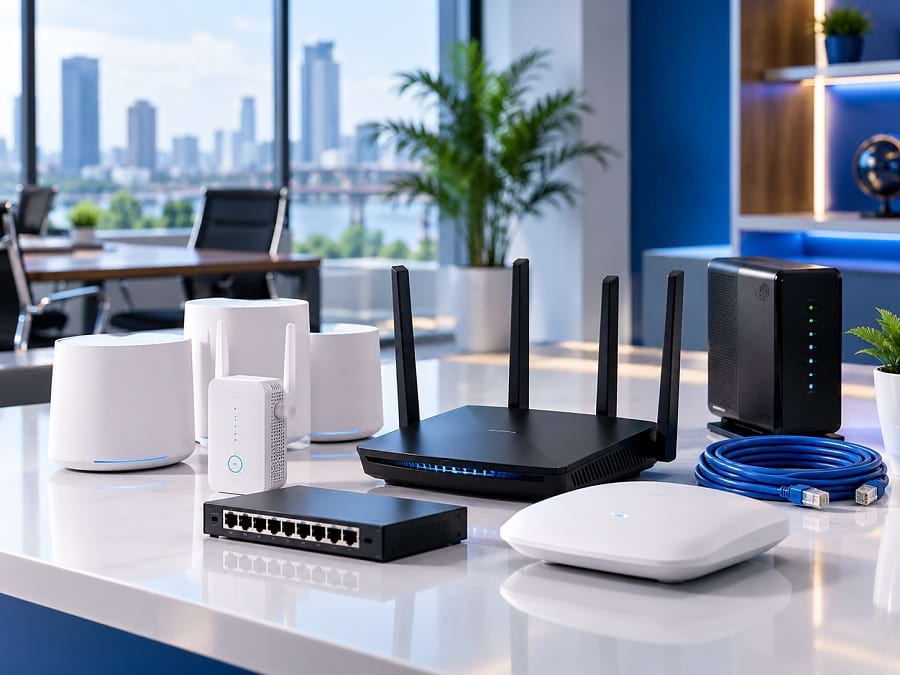
A Wi-Fi extender can be useful in situations where the existing wireless signal does not adequately reach a particular area. It receives the existing wireless signal and helps extend coverage to another part of the space.
However, placement matters. An extender should generally be positioned where it can still receive a reasonable signal from the main router. Placing it in an area where the original signal is already extremely weak may limit its usefulness.
5. Consider Wired Connections Where Appropriate
Wi-Fi is convenient, but wireless is not always the best option for every device.
Some equipment may benefit from a wired network connection, particularly where a consistent connection is important. Depending on the environment, computers, printers, networking devices and other equipment may be connected through Ethernet.
For businesses and organizations, considering both wired and wireless requirements can help create a more practical network.
The right approach depends on the building, number of devices, intended use and available infrastructure.
6. Security Should Be Part of the Decision
A network is not only about speed. Security also matters.
Your router and other networking devices should support appropriate security features, and network access should be managed carefully. Strong passwords, updated equipment and sensible access controls can help reduce unnecessary security risks.
Businesses should pay particular attention to who can access the network and which devices are connected to it.
Networking equipment should therefore be selected with both performance and security in mind.
7. Think About Your Actual Use
Different users have different networking requirements.
Someone who mainly browses the internet and uses social media may have very different needs from a business that relies on video conferencing, cloud applications, multiple computers and connected security equipment.
Before buying anything, ask a few simple questions:
What will the network be used for?
How many people will use it?
How many devices will connect?
How large is the area that needs coverage?
Are there areas where the current signal is weak?
Will some devices require wired connections?
Are there specific networking or security requirements?
Answering these questions can make it easier to identify the type of equipment you actually need.
8. Avoid Choosing Equipment Based Only on Price
Price is important, but it should not be the only consideration.
The cheapest device may not provide the capacity, coverage or features required for your environment. At the same time, the most expensive option may offer features that you will never use.
A better approach is to compare the equipment against your actual requirement.
Look at specifications, compatibility, intended use and the number of devices you expect to connect. This helps you spend money on equipment that provides practical value rather than simply paying for features you do not need.
Getting the Right Networking Products
Choosing networking equipment becomes easier when you start with the problem you are trying to solve.
If your main issue is poor coverage, you may need to look at Wi-Fi extenders or related networking equipment. If you are setting up connectivity for a business, you may need routers, networking devices and supporting accessories that can accommodate more users and devices.
At Elvora Trading Limited, we supply technology and networking products for individual, business and organizational requirements. Our supply categories include Wi-Fi extenders, routers, networking devices and related technology products.
Whether you already know the exact product you need or you are still trying to determine the right option, it helps to provide useful information about your requirement. Tell us the type of product you are looking for, the quantity, relevant specifications and what you intend to use it for.
A good networking solution starts with understanding the requirement first. Once that is clear, it becomes much easier to identify equipment that fits the space, users and purpose.
Need networking equipment for your home, office or organisation? Contact Elvora Trading Limited with your requirement and let us help you identify the relevant supply options.